The UK’s ageing PME (TN-C-S) network combines neutral and earth, so current can take paths electricians aren’t taught to spot.
What Is PME?
PME (Protective Multiple Earthing) shares one neutral-earth conductor, so a fault can put current on “isolated” systems. Learn more ›
Why Isn’t This Taught?
Training assumes isolation works. On site, diverted currents slip past it. This campaign fills that gap. Learn more ›
The Golden Rule
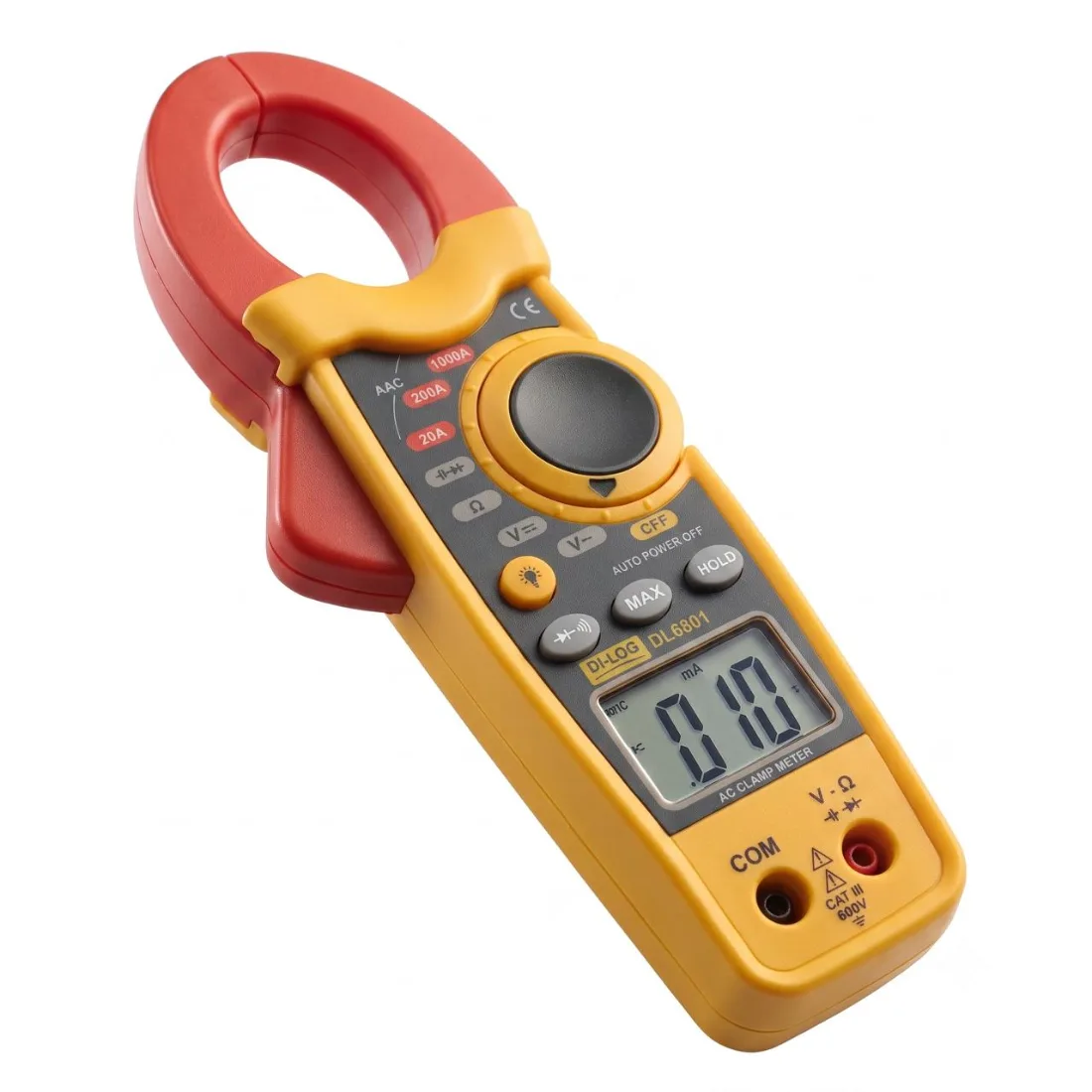
Always Use a Clamp Meter Before Isolating.
It could save your life. Before isolating any electrical system, use a clamp meter to check for current flow on the main earth. If current is present, the system is NOT safe to work on. Learn more ›
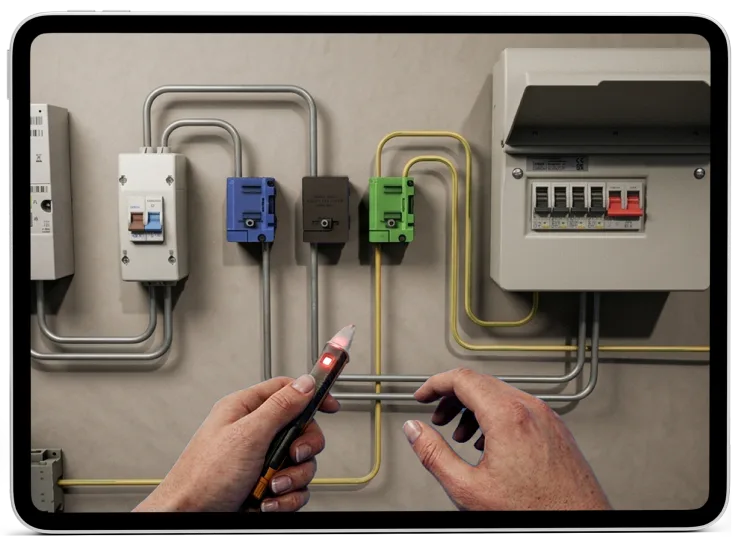
Voltage indicators and isolation devices won’t detect diverted neutral currents. Only a clamp meter will. Learn more ›
The Training Problem
You Can’t Teach This Safely on a Rig.
Traditional methods can’t teach this safely. Simulation can.
The Classroom Dilemma
A rig can’t safely carry a 10A diverted neutral current. Real PME networks can, and do.
The Tradefox Solution
Build the muscle memory to survive a PEN fault, risk-free.
Practise finding lethal faults. See what failed isolation does. No hospital visit.
Who Needs to Know?
Everyone who works on UK installations, from day one to year forty.
Apprentices and Students
Learn what the textbooks leave out.
Working Electricians
Learn to detect diverted neutral current and work safely around it. Learn more ›
Safety Training • Learn to identify hidden electrical dangers
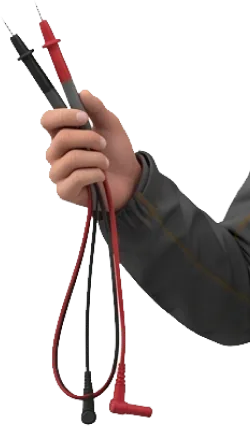
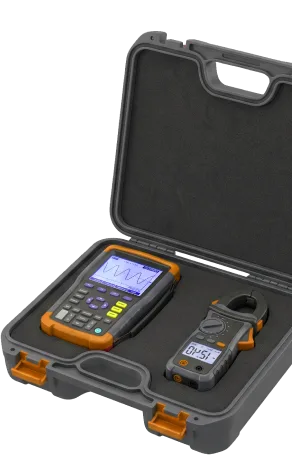
Proper Use and Techniques
Testing Equipment
Equipment Training • Master essential testing tools and procedures
Step-by-Step Guide
Isolation Process
Safety Protocol • Follow correct procedures for safe isolation
The Critical Protocol
Found a Diverted Neutral Current?
Detection is step one. Here’s what to do next. Learn more ›
1
Measure the Current
Use your clamp meter to record the exact current flowing on the earth conductor, bonding or structural element. Learn more ›
2
Assess the Severity
Industry guidance suggests the 10A threshold—currents above this level indicate a serious fault requiring immediate DNO notification.
The DNO’s “Safe” Threshold vs. Reality:
The DNO notification threshold is 10A (10,000mA). But it only takes >15mA across the chest to cause a lethal shock. The industry’s “acceptable limit” is over 600 times the lethal dose. If your clamp meter reads unexpected current, breaking that connection could force a lethal voltage through your body.
3
Report to the DNO
Contact your local Distribution Network Operator to report the diverted current. Provide measurements, location details, and any relevant installation information. The DNO is responsible for investigating and rectifying network-side faults.
4
Document Everything
Record findings, measurements, DNO contact and any remedial action. Share anonymised data through our Registry.
We'd like to use analytics cookies to see which safety guides people read, so we can improve them. No advertising, and nothing is set unless you accept. Privacy policyCookie policy
PenFault is an educational campaign owned and funded by Tradefox, which sells electrical safety training. matt:e is a campaign partner.